The MST invited us to the 14th National Meeting held from January 19th to 23rd in Salvador, Bahia. After five days immersed in one of the world’s largest and most powerful social movements, we embarked on a three-week journey that took us from the state of Ceará to the south of the country. Along the way, we witnessed the evolution of agricultural cooperatives and the impact that Mundukide’s support has had in recent years.
We began in Ceará, where we visited settlements like Zé Maria de Tomé, recently legalized after more than a decade of resistance. There, families who lived for years under plastic sheeting, without water or electricity, are now organizing the production of more than 70 types of fruit and dream of creating their own cooperative to break free from dependence on intermediaries. In the Nova Canaá settlement and the Coopersc cooperative, we observed how collective organization has radically transformed the family economy: increased productivity, improved income, and a strengthened role for women at the grassroots level. “We used to be one group, and now we’re another,” one of its members summarized.
The commitment to agroecological innovation was also evident at the Ana Primavesi Technical School and the new Josué de Castro Faculty, the first university promoted by the MST (Landless Workers’ Movement). Both initiatives combine technical training, applied research, and community life, integrating production, knowledge, and political organization. Agroecology, bio-inputs, and research on natural fertilizers are part of a strategy that seeks productive sovereignty and environmental coherence.
In the south, around Porto Alegre, we visited Terra Livre Agroecologia and cooperatives like COOTAP and COOPAN, leaders in large-scale organic rice production. Their growth has been remarkable: from fragile structures to organizations that now generate tens of millions of reais in revenue, with increasingly professionalized planning, management, and marketing systems. In all cases, Mundukide’s support in economic management, planning, and organizational strengthening was explicitly recognized as a key factor in their consolidation.
The industrial and logistical dimension of cooperativism was evident in experiences like Coopercontestado and the Central de Cooperativas de Reforma Agraria (CCA) in Paraná, where the integration of production, storage, and distribution allows for increased efficiency and profitability. Strategic planning and the incorporation of new generations appear as key challenges for the future.
The financial sphere also occupies a strategic place. FINAPOP, created in 2020 as a financing instrument for the MST’s productive sector, has experienced extraordinary growth, channeling resources to dozens of cooperatives and thousands of families. Its challenge now is to scale the model and advance its internationalization, in a context of a strong need for capital to sustain growth.
Beyond the economic dimension, the trip powerfully demonstrated the human and community dimension of the movement. At the Leonel Brizola camp, 150 families are resisting in precarious conditions while they await the legalization of their land titles. At the Vila Jardim Solidarity Kitchen, volunteers organize dinners for hundreds of people every week, demonstrating that organized solidarity can sustain dignity even in contexts of extreme vulnerability.
The visit to the Florestan Fernandes National School reminded us that the MST is not just about production, but also about political formation, spirituality, and the collective construction of meaning. “The spiritual aspect is what sustains us,” they told us, emphasizing that the symbolic and communal dimension is as important as the economic one.
The trip concludes with a clear realization: after more than twenty years of collaboration, Mundukide is recognized as a strategic ally in strengthening MST cooperatives. Where there was once organizational precarity, there is now planning; where there was dependency, there are now independent structures; where there was mere survival, there are now projects for the future.
The MST leaves us with a powerful image: communities that, organized collectively, transform land, economy, and hope.
Itsaso Erretolatza Arantzabal – Director of Mundukide
Daily testimonials
MUNDUKIDE IN BRAZIL -1-
We’ve just begun our journey in the state of Ceará, in northern Brazil. It’s a state with a hot climate and little rainfall, and we realized this as soon as we arrived. For the first few days, our guides will be Márcio Carvalho, a Mundukide volunteer, and Antonio José, from the MST (Landless Workers’ Movement) leadership in Ceará.
We ventured into the interior of Ceará, into the sertão (backlands), where we were welcomed at the Zé Maria de Tomé camp. They explained that they occupied these lands 12 years ago because the company that owned them wasn’t using them for anything. They cleared the land and, little by little, have developed a production of more than 70 types of fruit.
They told us that these have been hard years, that they’ve suffered attacks, that they’ve lost people along the way, but that it’s all been worth it. In the early years, they lived in shacks made of black plastic, without water or electricity. Many of their children were born there, and many met their partners there. In December 2025, the government finally legalized their situation. Fear has given way to hope. They speak with enthusiasm about building houses, creating a cooperative, and a new dream for the future.
Their biggest challenge now is creating a production cooperative so they don’t have to sell to intermediaries.
MUNDUKIDES IN BRAZIL-2-
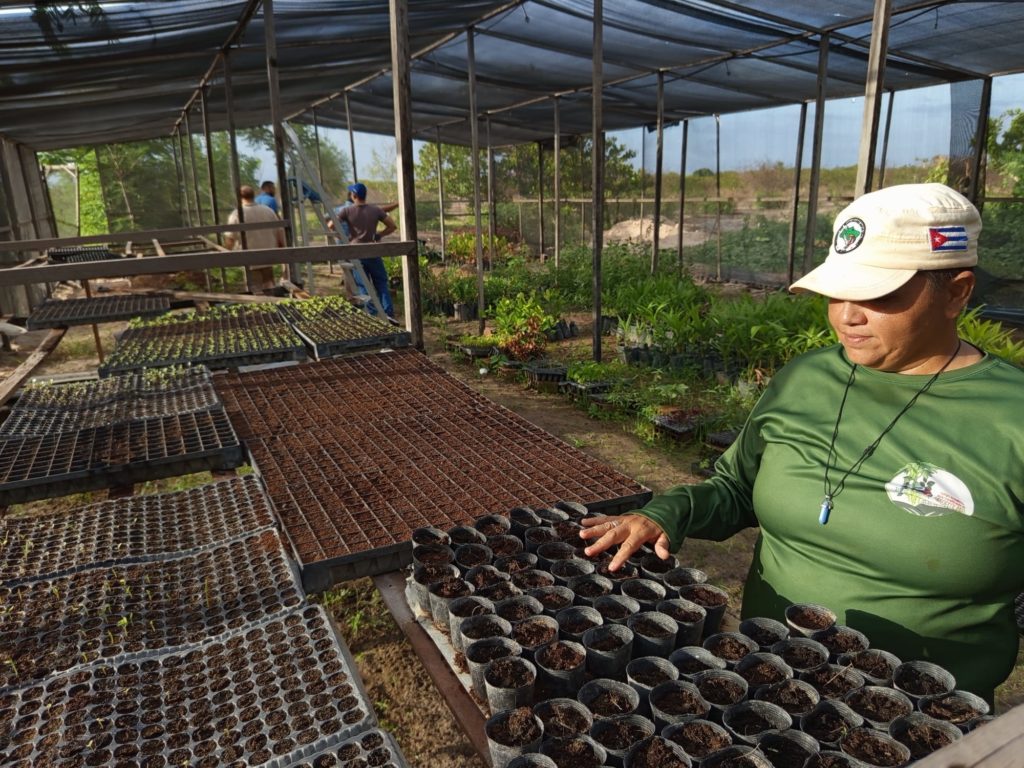
When we talk about innovation, we usually think of AI, robots, or electric cars. We rarely combine innovation and agriculture in the same sentence. Well, that’s precisely what they’re doing at the “Ana Primavesi Agroecological Production Area” technical school in Ceará.
Today we visited them, and they told us that they are researching techniques for organic agricultural production. They use a 10-hectare plot of land, donated by the community of the Bernardo Marin settlement, as their laboratory.
They are currently researching new production techniques for mangoes, bananas, loquats, and a type of cactus that will be used as animal feed. This knowledge will then be made available to all farmers in the MST (Movement of Landless Workers), as their dream is to achieve fully organic production.
They gave us a wonderful welcome, with juices made from fruit grown right there, although the visit didn’t come free… because they put Itsaso to work!
MUNDUKIDES IN BRAZIL -3-
We visited the Coopersc mixed cooperative in Ceará. They produce dairy products from the milk of 236 members from 36 communities (45% of whom are women), who also grow vegetables and eggs. They make cheese, cream, and ricotta from the milk, and handle the sales: most of it goes to government-run soup kitchens, and the rest to small markets.
They have 16 worker-members, and the level of participation is equal among all members.
Among their suppliers and partners is the Nova Canaá settlement, made up of 90 families. The 5,900 hectares of land are used communally, since the dry soil would not be productive enough if divided. Half of the families raise livestock, and most sell their milk to Caoperasc. Previously, they sold to dairy companies at ridiculously low prices. Today, prices have changed, and production has also increased significantly. From an average income of 200 reais per family, they now earn 5,000 reais per month. And they have improved from 6 liters per animal per day to an average of 15 liters in 6 years.
They told us that in 2002 they camped under plastic sheeting and the next day began working the land, organized in groups of 10 families, as they were illiterate at the time. Today, the government has built them an agricultural technical school, and the MST continues working to ensure the proper production methods.
Family farming produces 30% of Brazil’s total output, but feeds 70% of the Brazilian population.
They thanked us for Mundukide’s work, as they have learned about cooperative management from J. Luis, Itziar, Etor, Xabier, Iker, and now also from Márcio.
“Before, we were one group, and now we are another.” — Lucimerio
MUNDUKIDES OF BRAZIL -4-
The MST (Landless Workers’ Movement) has taken a historic step by launching its first university in early 2026: the Josué de Castro Faculty. The new university center offers technical training in cooperative administration and advanced courses in cooperative management, designed by and for the movement itself. The first graduating classes were comprised of adult leaders from the MST. Today, however, it is young people from the movement who are pursuing these studies. The educational model goes beyond the classroom: students live on campus and organize themselves collectively to ensure its operation. Each morning, they divide up the tasks necessary for daily life—cleaning utensils, doing laundry, managing the store, or the essential morning ritual—integrating academic learning with community practice. Throughout the course, time spent at the faculty is combined with periods of practical experience in their own cooperatives and communities. A short distance from the campus is the Ana Primavesi Production Unit, a bio-input factory that reinforces the MST’s commitment to agroecology. Through compost production and work with microorganisms, the center produces organic fertilizers for local farming communities. These inputs are even distributed by drones, allowing for cultivation without the use of chemicals. The university also has a project underway to create a microlaboratory to promote research aimed at identifying the most efficient microorganisms for producing natural fertilizers. The day concluded with a visit to a brick factory. There, they are researching how to produce ecological bricks from local soil. The necessary machines for their manufacture have already been designed, and current work is focused on perfecting the appropriate mixture. The objective is twofold: to build houses in MST settlements and to send ten of these machines, along with a brigade, to Palestine for use in the reconstruction of Gaza.
BRAZILIAN WORLD KIDS -5-
In the settlement of Capela is located the Coopan cooperative, one of the first of the movement. Indiane, born during the camp’s early days and now a member working in administration, embodies the collective history of the place through her own story.
Currently, 82 members from 29 families work communally in the rice fields and the meat value chain. In addition to rice cultivation, the cooperative manages a slaughterhouse where value is added to the cattle and pigs raised in the settlement itself. Each year, between 4,000 and 4,500 head of cattle are slaughtered for meat production. The infrastructure allows for the daily processing of 300 pigs and 50 cows, including the production of sausages.
Rice production occupies 287 hectares, from which 26,000 50-kilo sacks were obtained in the 2025 harvest. The rice is marketed under the Coopan and Terra Livre brands. Although the settlement’s shop is an important sales channel, a large portion of sales are secured through contracts with school cafeterias and other stable markets.
Community life is a cornerstone of the settlement: housing, a communal dining hall, and a community childcare system allow all adults to work. The significant presence of young people is also noteworthy, with a high percentage of members over 16 years of age.
The annual plan sets advance payments based on hours worked. The typical workday is nine hours, in the fields, the slaughterhouse, or the administration. Increased production has necessitated the hiring of more than 20 external workers, generally from other camps.
Sales are performing well, and profits are distributed at the end of the year among all members, without distinction. As in all settlements, a minimum forest reserve of 20% is maintained, integrating production and environmental stewardship.
MUNDUKIDES IN BRAZIL -6-
We continue our journey in the south, in the area surrounding the city of Porto Alegre, home to the largest producer of organic rice in the Americas: Terra Livre Agroecologia. Under this name, several cooperatives in the region have joined forces around a common project: to collectively organize rice production in order to gain strength, structure, and market influence.
The largest of these cooperatives is COOTAP. Although founded in 1995, it wasn’t until 2009 that it adopted its current working model. At that time, only 60 members marketed their production; today, 800 do so collectively. Each year, the members cultivate approximately 4,500 hectares of rice, the marketing of which is handled by the cooperative.
The growth has been remarkable. Currently, COOTAP exceeds 50 million reais in annual sales, combining income from rice and vegetable production. This figure contrasts sharply with the mere 80,000 reais billed in 2009 and clearly illustrates the magnitude of the leap forward.
Mundukide began working with the cooperative in 2017. According to the organization itself, this collaboration has been key to implementing planning and financial management processes that have substantially improved its internal operations. Furthermore, they have taken decisive steps in the areas of sales and marketing. The outcome is clear: they are proud of what they have achieved through their joint efforts.
Beyond the cooperative’s management, we also had the opportunity to speak with members who work directly in the fields. They were all familiar with Mundukide’s work and agreed in their appreciation of the efforts made. There was no shortage of words of gratitude and positive references to all the volunteers who have worked here over the years.
MUNDUKIDES IN BRAZIL -7-
The contrasts of Porto Alegre become evident within a few meters. From streets dominated by wealth, high-end cars, and luxury buildings, Álvaro Bombero and @lucasgertzmonteiro lead us to Cozinha Solidária @cozinhasolidaria.vilajardim in the Vila Jardim community, a place where reality changes radically.
In this community courtyard, dinners are served three times a week. Today is Friday, and a line of about 350 people is waiting. We arrive as pots simmer with beans, offal, and pork over the fire.
For the past two years, they have received official support through the government program PAA. But this story began before that. The young project leader recalls how, in the beginning, she cooked at home for those in need. The daughter of recyclers, she remembers a childhood marked by hunger: many days, breakfast consisted of little more than the remains of a juice box her father found. That experience left its mark on her. She is certain that she will always help, to the best of her ability, those who have nothing. Today, they have an industrial kitchen, which she describes, without hesitation, as a luxury.
Another volunteer recounts a harrowing episode: after a confrontation, her house was destroyed, and her mother was found with a gunshot wound. In that critical moment, the women at the soup kitchen opened their homes to her while they rebuilt theirs. The emotion of that shared solidarity is palpable.
Another volunteer was illiterate and, thanks to the program, has earned her diploma. Everyone who runs the kitchen does so on a voluntary basis.
Today, they are also celebrating another milestone: the construction of a larger kitchen on an adjacent plot of land, owned by the father of one of the volunteers. They lay the bricks while dreaming of transforming the current space into a community garden and, if possible, beautifying the neighborhood with urban art and walls covered in plants.
We left deeply moved, after meeting people with modest means and immense hearts.
MUNDUKIDEA IN BRAZIL -8-
Today we are at another of COOTAP’s factories. Jacqueline welcomes us to the tomato and jam canning plant, where agroecological production is transformed on an industrial scale. She guides us through the entire logistics process: from the arrival of the tomato crates by truck to the process that transforms what at home would be a simple household task into 163 tons annually for sale.
After washing and sorting, the tomatoes go through the chopping machines and arrive at the boilers, large industrial kettles where the organic tomatoes boil for three hours before being packaged. Given the high cost of glass and the current lack of a recycling system, the cooperative is launching a new packaging format: aluminum bags. All products bear the Terra Livre eco-label, easily recognizable for its elegant presentation.
During lunch at a roadside restaurant, a truck driver tells us that a rodeo is taking place in Vacaria, the town we’re heading to. It’s hard to imagine a better plan for a Saturday afternoon than joining in a gaucho celebration. The scene is picture-perfect: baggy pants, gingham shirts, leather boots, and hats dominate the atmosphere.
We enjoy the rider competitions, both in roping events and in the challenge of staying on wild horses for as long as possible. A powerful, almost cinematic spectacle, worthy of the best Wild West.
MUNDUKIDES IN BRAZIL -9-
We visited the Leonel Brizola camp, where 150 families have been settled on communal land for just a year. Winter here is especially harsh, and the urgency is clear: to begin building homes as soon as possible, which necessarily involves legalizing the settlement.
Daily life reveals the precariousness of the situation. Many families have to go out to work to buy food. Water is carried in buckets, and the shared latrines are located on the outskirts of the camp. These are minimal conditions, sustained by a collective organization that allows them to resist.
Since it was Sunday, the camp held an assembly, to which we were invited. After a performance of the mystical tradition, the speaker gave us the floor to introduce Mundukide. Public speaking is part of daily life: it is common to introduce oneself to the group, explain who one is and what one does. It is no coincidence that public speaking is learned here almost out of necessity.
The closing of the assembly was left to the children, who brought the meeting to a close with songs and music. Afterward, as is customary, we were invited to share a communal lunch prepared for all attendees.
Little to have, much to offer. At the Leonel Brizola camp, the survival lesson is clear: strength lies not in resources, but in the warmth of the group.
MUNDUKIDES IN BRAZIL-10-
Today we participated in the expanded board meeting of the Coopercontestado cooperative in the city of Fraiburgo. The meeting was attended by all six board members, along with a representative from each region. At the beginning of February, the cooperative already has its 2025 year-end data, which will be presented at the March assembly using Power BI.
The numbers clearly reflect the progress made since the collaboration with Mundukide began nine years ago. The transition from a crisis situation to the current solvency has been remarkable. Throughout this process, Mundukide has made a decisive contribution in areas such as management, planning, and various organizational processes, helping to shed light on the path ahead. The recognition was explicit, especially towards the cooperative members who have worked on the ground.
After the meeting, we visited the cooperative’s factory. There, they showed us the complete legume processing: drying the beans, removing stones, mechanical cleaning, and the bagging system. The machines have 200-kilo silos per unit. In total, they manage about 2,000 60-kilo bags, which represents 120 tons from their own production.
The harvest season, or zafra, usually lasts about three months, approximately 90 days, although it can be longer depending on the year. The product is stored when it reaches a moisture content below 14–15%, which allows for year-round production thanks to the available stock.
Coopercontestado also maintains collaboration agreements with other cooperatives that do not have their own processing facilities, processing their production as well. Although the cooperative produces milk and apple juice, the packaging process is outsourced, and they then handle the marketing themselves.
Eleven people work at the plant, while the producer base consists of 320 members, distributed within a radius of up to 280 kilometers. It’s a broad, geographically diverse, and increasingly consolidated cooperative network.
MUNDUKIDES IN BRAZIL -11-
In the city of Curitiba, capital of the state of Paraná, are located the Central de Cooperativas de Reforma Agraria (CCA) and its distribution center, a strategic hub for the economic integration of agricultural cooperatives. What began as a store eventually transformed into a large logistics warehouse. The reason was clear: centralizing the logistics of the products from the various cooperatives was the most efficient path to profitability.
The center has shelving with a capacity of 60 tons of palletized goods—beans, rice, juices, and other products—and 23 m² of cold storage for fresh products such as milk and yogurt. An expansion of the facilities is already underway.
The logistics operation relies on three company-owned trucks, which collect produce from local cooperatives, store it, and organize distribution in batches. They cover distances of up to 400 kilometers, supplemented when necessary by subcontracted trucks. The core team consists of six people, including three truck drivers. Purchasing, payments, and system updates are handled by different staff members, with the possibility of adding two more workers on a temporary basis for increased flexibility.
The CCA functions as an association of cooperatives: it brings together 25 cooperatives and represents 7,000 members. In practice, it acts as a state cooperative corporation, promoting joint marketing and the design of the management model for its member cooperatives.
The central office itself recognizes the need to move towards a new, more in-depth and detailed planning model that will allow it to adequately support the creation and consolidation of new cooperatives. Furthermore, it faces a major strategic challenge: in the next two years, it will take on the initiative to establish a new bio-inputs cooperative. The leadership is in the hands of a young, well-prepared team with clear ideas.
MUNDUKIDES IN BRAZIL-12-
Protected by the rainforest stands the Escola Nacional Florestan Fernandes, a complex made up of several buildings, all designed with a clear social function. It was inaugurated in 2005, after five years of collective construction driven by organized, rotating activist work.
Here, political theory courses are taught to the leadership and cadres of the MST (Landless Workers’ Movement). The training combines study and debate, with the aim of replicating the content later in the different states of the country, strengthening the movement’s cohesion and strategy.
Today, a meeting of political coordinators from ALBA (Bolivarian Alliance for the Peoples of Our America) begins at the school, and the atmosphere is one of intense preparation. The facilities can accommodate up to 200 people and host plenary sessions and various meetings, reaching a total capacity of 500 people, including a kitchen.
As in all MST structures, daily organization is structured around working groups, responsible for the tasks necessary during the courses. “Work is a pedagogical dimension,” Cassia explains, emphasizing that collective action is part of the training process.
When asked about the daily mystique, her answer sums up the spirit of the place:
“The moment of mystique is a representation that keeps us believing, it sustains us, it’s the moment when we regain our energy.”
MUNDUKIDES IN BRAZIL 13
At FINAPOP—Financiamento Popular para Produção de Alimentos Saudáveis (Popular Financing for the Production of Healthy Foods)—we are greeted by Jiane, Cristina, and Luis, old acquaintances from so many MST gatherings. They are, without a doubt, some of the most solid professional profiles we have encountered in the movement.
FINAPOP was born at a critical moment, when the Crehnor credit cooperative ran out of resources. The initiative was conceived as a fundraising platform, under the direction of the MST’s productive sector, positioning itself as a key element among the areas of financing, production, agroecology, training, and marketing. Today it offers technical assistance, an investment platform, and securitization funds.
Since its creation in 2020, its growth has been extraordinary: from raising 1.7 million reais at its inception, it went on to finance 94.8 million reais last year. In 2024, it began a collaboration with Mundukide, aimed at strengthening the solvency and organization of cooperatives.
The current challenge is enormous: they estimate a need for 500 million reais. Therefore, they are exploring an internationalization strategy, with avenues open in the United States, and prospects in Mexico and Europe. The average interest rate paid on new funds has been 7.5%, although it can reach 15% for new cooperatives or higher-risk investments.
The team consists of seven people—six in São Paulo and one in Sergipe. According to the latest data, they have established 157 lines of credit across 71 cooperatives, distributing 95 million reais that reach approximately 25,000 families.
Mundukide volunteers have collaborated in defining risk indicators and incorporating new financial management concepts.
In addition, we have met with the management of ECI (Escritório de Comercialização Institucional) and Armazéns do Campo. For years, Mundukide has supported the strengthening of their sales channels.
MUNDUKIDES IN BRAZIL 14
Just a few kilometers from Rio de Janeiro lies Maricá, a city determined not to become a ghost town. Lacking economic vitality, opportunities, and a future, it now stands as a living laboratory of social economy, fueled by oil royalties and a firm political conviction.
The current mayor and his friend Adalton reminisce about a different era: studying Sociology with virtually no resources, eating in convents, and traveling by bus to the University of Rio however they could. That hardship is now the driving force behind their transformation. Their goal is to ensure that future generations do not experience the same. To this end, they have created a unique ecosystem: literacy programs, free public transportation, loans in social currency, scholarships, a “university passport,” and, upon graduation, the establishment of cooperatives to guarantee employment.
The Banco Popular Mumbuca, the Casa das Cooperativas (House of Cooperatives), and a robust Secretariat of Social Economy form the basis of a model that seeks to incubate socially impactful ventures. Within this framework, the MST plans to launch a glass factory that will utilize 70% of the material collected by recyclers.
In parallel, and consistent with the agrarian reform agenda, plans are underway to establish a tractor factory to serve family farms. The chosen model is Chinese: acquiring assembly equipment and initially importing all parts, with a commitment to incorporating domestically produced components within two years, as required by Brazilian law.
These are enormous challenges, with a firm commitment to the cooperative model. At Mundukide, we are participating step by step, supporting the definition of industrial management models and processes. If institutional commitments translate into actual funding, the impetus provided by the cooperative experience could prove decisive.
Maricá even has a museum called “Utopia,” where projects aspiring to become reality are exhibited.