On August 7, Colombia reached a political turning point. Following an election in which the difference was barely more than 250,000 votes, Abelardo de la Espriella assumed the presidency after defeating Iván Cepeda of the Historical Pact. This marks the latest chapter in the transition towards right-wing populist governments in the Americas, particularly in presidential systems, where this form of populism seems to take strongest root.
This shift is part of a regional pendulum process that has been unfolding for more than a decade. The first wave towards the right began in 2015 with Mauricio Macri in Argentina and the impeachment of Dilma Rousseff in Brazil in 2016, which paved the way for Jair Bolsonaro in 2018. During this period, the region also experienced shifts, in different forms, in Ecuador, Chile, Colombia, Uruguay and Guatemala, as well as the rise of Nayib Bukele in El Salvador. Alongside Bolsonaro and Trump, Bukele became one of the examples of this new form of populism.
The arrival of the pandemic in 2020 catalysed growing social discontent and mobilisations, causing the pendulum to swing in the opposite direction. Progressive governments emerged in Bolivia, Chile, Honduras and Peru. This was followed by Lula da Silva’s return to power in Brazil after a political and judicial process, and Gustavo Petro’s election in Colombia as the country’s first left-wing president in its history.
Today, the landscape has shifted once again, further towards right-wing populism. This movement began in 2023 with Javier Milei in Argentina, Daniel Noboa in Ecuador and Santiago Peña in Paraguay. The shift continued in Panama, Chile and Bolivia, as well as with Donald Trump’s return to the White House and the US military intervention in Venezuela, which left Delcy Rodríguez as interim president. With Keiko Fujimori’s victory in Peru and de la Espriella’s in Colombia, the Latin American map has become almost a single-colour bloc, with the exceptions of Claudia Sheinbaum in Mexico and Lula in Brazil, who in a few weeks will face another electoral challenge involving Flávio Bolsonaro, Jair Bolsonaro’s son.
The change in Colombia is symbolic. Despite achievements such as halving inflation, reducing poverty and doubling the minimum wage; formalising more than one million hectares of land; tripling pension coverage for older adults; and protecting 42% of the national territory—including the Amazon—from mining and oil extraction, Petro and Cepeda, as leaders of the Historical Pact, failed to mobilise their grassroots support sufficiently in the elections.
Just a month and a half after the new president took office, the institutional contrast is already stark. Through 200 rapid-fire decrees, the administration began dismantling previous safeguards. This reduced resources for Indigenous, Afro-descendant and peasant organisations by 90%, brought cultural and education programmes to a halt, and began repealing protections for páramos such as Santurbán.
The rhetoric of a “hard-line” approach has reignited tensions in the armed conflict. The announcement that previously established peace talks would be suspended, together with restrictions on the Special Jurisdiction for Peace and increased military pressure, has triggered clashes that have sharply increased confinement and forced displacement. This policy has failed in the past in a country where armed groups now have more than 28,000 members spread across more than 500 municipalities and 30 of the country’s 32 departments. And throughout this process, it is citizens—particularly those in rural areas—who are literally caught in the crossfire between two or more sides.
Internationally, the shift has been absolute: closer alignment with Israel, the relocation of the embassy to Jerusalem, and the withdrawal of support for South Africa’s genocide case before the International Court of Justice.
His proposal to support mining and fracking includes plans to review the right of ethnic communities to prior consultation, which could create major environmental risks in páramos and protected areas. The administration is proposing a 2027 budget of 635 trillion pesos, compared with 547 trillion in 2026, eliminating wealth taxes, cutting investment and increasing spending on government operations and debt, all while reconstruction following the August earthquake remains pending.
There are also concerns about privatisation following the appointment of campaign strategists to senior positions at Ecopetrol, while political and legal pressure on the opposition is increasing and changes to police protocols for student protests are being proposed.
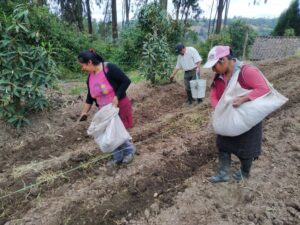
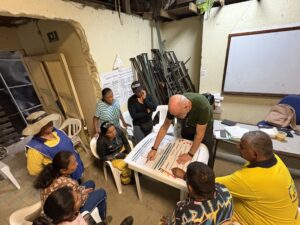
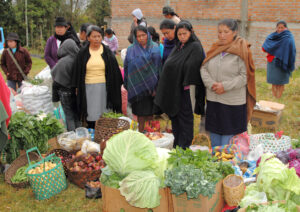
The Mundukide Foundation currently works in Latin America in Brazil, Ecuador and Colombia, supporting socioeconomic development processes alongside leading social movements and platforms such as the Landless Workers’ Movement in Brazil and, in Colombia, Waste Pickers’ organisations and Pastos Indigenous Women’s organisations.
During this short period in Colombia, these groups have moved from uncertainty and fear over the change of government to a growing certainty that they are entering a period of social regression, adopting a strategy of resistance that will likely include peaceful civil disobedience and non-cooperation.
As has happened in previous periods, it will be the internal contradictions generated by these populist governments with traditional right-wing forces and capital, and above all social mobilisation, that may open up possibilities for future change. However, this context also includes new variables, such as US military intervention and the decline of international cooperation, which in the past was able to support these groups.
In this situation, maintaining Mundukide’s work is, if anything, even more important. We must review our processes to ensure the continuity of our activities while guaranteeing the safety of all the people we work with, and seek new ways to sustain resistance within our socioeconomic development processes.
In this resistance, the role of Basque society as a whole becomes particularly important, and especially that of the cooperative world of work, which is widely recognised in our field of action and has Universal Solidarity as one of its principles. Principles are our guide, but if they are not to remain abstract, we must continually bring them to life through concrete action. Whether or not we do so in the coming years will likely determine our identity—and perhaps our own future.
Jose Luis Lejardi Bernaola_ Cooperator of Mundukide